Black Grey White Color Scheme Black Grey White Color Scheme Art
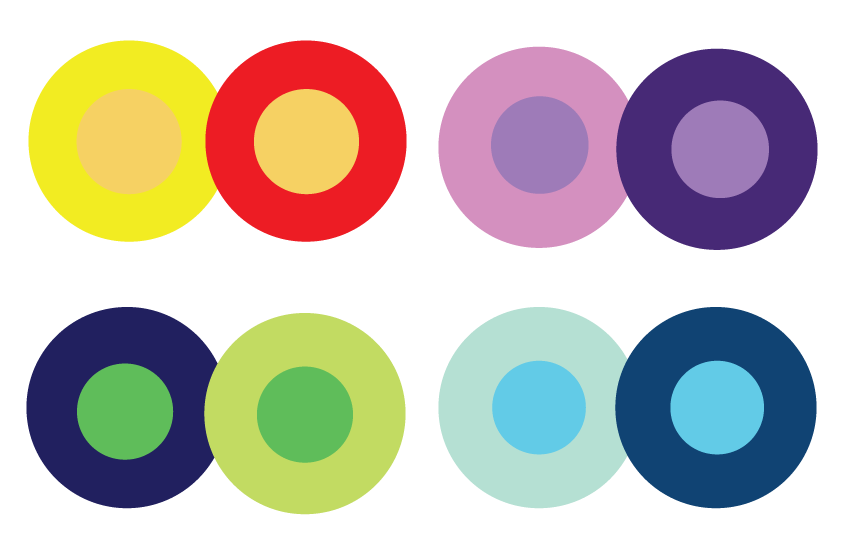
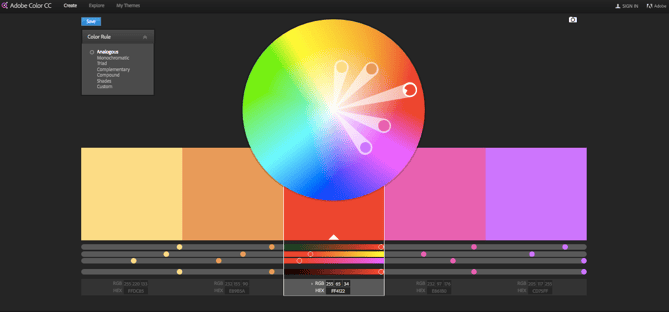
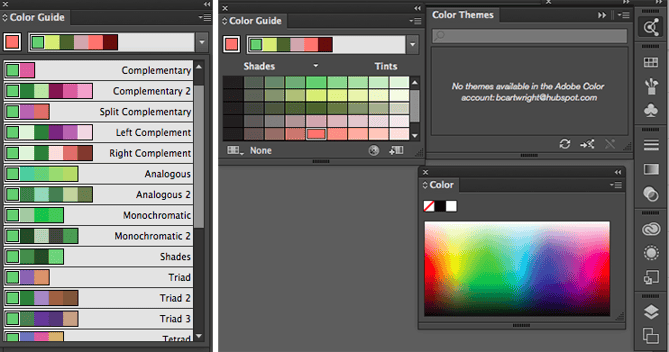
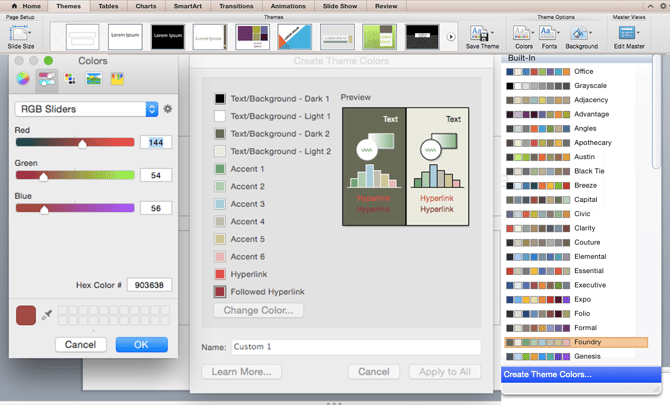
When you're sifting through your News Feed, what tends to catch your attention? More probable than not, it's YouTube videos, pictures, blithe GIFs, and other visual content, right? While text-based content is always of import when seeking answers to a question, creating visuals such as infographics, charts, graphs, blithe GIFs, and other shareable images can do wonders for catching your readers' attention and enhancing your article or written report. I know what y'all might exist thinking: "I don't know how to blueprint crawly visuals. I'thousand not artistic." Hi. I'm Bethany, and I will be the first to tell yous that I'1000 non naturally creative. And even so, I found a strength in information visualization at HubSpot, where I've spent virtually of my days creating infographics and other visuals for blog posts. So, while I wouldn't say I'm naturally artistic, I have learned how to create compelling visual content. So can yous. And you can practice this by learning color theory. Consider this your introductory course, and we'll exist covering the following topics: Color theory is the footing for the main rules and guidelines that surround color and its use in creating aesthetically pleasing visuals. By understanding colour theory basics, you lot can begin to parse the logical structure of color for yourself to create and use color palettes more strategically. The consequence means evoking a particular emotion, vibe, or artful. Color is an important attribute, if not the most important aspect of blueprint, and can influence the meaning of text, how users move around a particular layout, and what they experience as they practise so. By understanding color theory, you tin can be more than intentional in creating visuals that make an impact. While there are many tools out there to help even the most inartistic of us to create compelling visuals, graphic design tasks require a piddling more background noesis on design principles. Accept selecting the right color combination, for instance. It's something that might seem piece of cake at first simply when y'all're staring down a color wheel, you're going to wish y'all had some information on what you're looking at. Understanding how colors piece of work together, the impact they can accept on mood and emotion, and how they change the look and feel of your website is critical to assistance you stand out from the crowd — for the correct reasons. From constructive CTAs to sales conversions and marketing efforts, the correct color pick can highlight specific sections of your website, make information technology easier for users to navigate, or give them a sense of familiarity from the first moment they click through. But it'southward not enough to but select colors and hope for the best — from color theory to moods and schemes, finding the right HTML colour codes, and identifying spider web-accessible colors for products and websites, the more you know about using color, the better your chances are for success. Read on for our designer'south guide to colour theory, colour wheels, and colour schemes for your site. Let'south start become back to high school art class to hash out the basics of color. Remember hearing about master, secondary, and tertiary colors? They're pretty important if you want to understand, well, everything else about color. Primary colors are those you can't create by combining two or more other colors together. They're a lot like prime numbers, which can't exist created by multiplying two other numbers together. There are 3 primary colors: Call up of primary colors every bit your parent colors, anchoring your design in a general colour scheme. Any one or combination of these colors can give your brand guardrails when y'all move to explore other shades, tones, and tints (nosotros'll talk most those in just a infinitesimal). When designing or even painting with primary colors, don't feel restricted to merely the three primary colors listed above. Orange isn't a primary color, for example, just brands tin can certainly utilize orange as their dominant colour (as we at HubSpot know this quite well). Knowing which primary colors create orange is your ticket to identifying colors that might go well with orangish — given the right shade, tone, or tint. This brings us to our side by side type of color ... Secondary colors are the colors that are formed past combining whatsoever two of the iii primary colors listed above. Bank check out the colour theory model above — meet how each secondary color is supported by two of the three primary colors? At that place are three secondary colors: orange, purple, and green. Yous can create each one using two of the three primary colors. Here are the full general rules of secondary color creation: Keep in mind that the color mixtures to a higher place simply piece of work if you use the purest class of each master color. This pure class is known every bit a color'southward hue, and you'll come across how these hues compare to the variants underneath each color in the color wheel below. Tertiary colors are created when you mix a primary color with a secondary colour. From here, colour gets a piffling more complicated, and if y'all want to learn how the experts choose color in their design, you've got to first understand all the other components of colour. The nearly important component of third colors is that non every primary color tin can match with a secondary color to create a third color. For example, red tin can't mix in harmony with green, and bluish can't mix in harmony with orangish -- both mixtures would upshot in a slightly brownish color (unless of course, that'due south what you're looking for). Instead, tertiary colors are created when a principal color mixes with a secondary color that comes adjacent to it on the color bicycle below. There are six 3rd colors that fit this requirement: Okay, great. And then now you know what the "chief" colors are, but yous and I both know that choosing colour combinations, peculiarly on a calculator, involves a much wider range than 12 basic colors. This is the impetus behind the color cycle, a circle graph that charts each primary, secondary, and tertiary color — likewise as their respective hues, tints, tones, and shades. Visualizing colors in this way helps you choose color schemes by showing you how each colour relates to the color that comes next to information technology on a rainbow color scale. (As you lot probably know, the colors of a rainbow, in order, are red, orange, yellow, dark-green, blue, indigo, and violet.) When choosing colors for a color scheme, the color wheel gives you opportunities to create brighter, lighter, softer, and darker colors by mixing white, black, and gray with the original colors. These mixes create the color variants described below: Hue is pretty much synonymous with what we really hateful when we said the word "colour." All of the chief and secondary colors, for instance, are "hues." Hues are important to remember when combining ii master colors to create a secondary colour. If you don't apply the hues of the 2 primary colors y'all're mixing together, y'all won't generate the hue of the secondary color. This is because a hue has the fewest other colors within it. By mixing two primary colors that carry other tints, tones, and shades inside them, you're technically adding more 2 colors to the mixture — making your concluding colour dependent on the compatibility of more than than two colors. If you were to mix the hues of red and blue together, for case, yous'd get purple, correct? But mix a tint of cherry with the hue of blue, and you'll go a slightly tinted majestic in return. You lot may recognize the term "shade" because information technology'south used quite often to refer to calorie-free and dark versions of the same hue. But actually, a shade is technically the color that you get when you add black to any given hue. The various "shades" just refer to how much black y'all're calculation. A tint is the contrary of a shade, just people don't often distinguish between a color's shade and a color's tint. You go a different tint when yous add white to a color. So, a color tin can accept a range of both shades and tints. You lot can also add both white and black to a colour to create a tone. Tone and saturation essentially mean the same thing, merely most people will apply saturation if they're talking most colors being created for digital images. Tone will be used more often for painting. With the nuts covered, let'southward swoop into something a little more complicated — like additive and subtractive color theory. If you lot've ever played around with color on whatever computer plan, you've probably seen a module that listed RGB or CMYK colors with some numbers next to the messages. Ever wondered what those letters mean? CMYK stands for Cyan, Magenta, Yellow, Key (Black). Those also happen to exist the colors listed on your ink cartridges for your printer. That's no coincidence. CMYK is the subtractive color model. It's called that considering you accept to subtract colors to get to white. That ways the reverse is true — the more colors yous add, the closer you get to blackness. Confusing, right? Think almost printing on a piece of paper. When you lot beginning put a sheet in the printer, you're typically printing on a white piece of paper. By adding color, you're blocking the white wavelengths from getting through. And then, allow's say you lot were to put that printed piece of newspaper back into the printer, and print something on it once again. You'll notice the areas that have been printed on twice will have colors closer to black. I find it easier to think most CMYK in terms of its respective numbers. CMYK works on a calibration of 0 to 100. If C=100, M=100, Y=100, and K=100, you lot end up with blackness. Only, if all four colors equal 0, you lot terminate up with true white. RGB color models, on the other hand, are designed for electronic displays, including computers. RGB stands for Red, Green, Blue, and is based on the condiment colour model of light waves. This means, the more color y'all add together, the closer you get to white. For computers, RGB is created using scales from 0 to 255. And then, black would exist R=0, G=0, and B=0. White would be R=255, G=255, and B=255. When you're creating color on a calculator, your color module will usually list both RGB and CMYK numbers. In practice, you can use either one to discover colors, and the other color model will adapt accordingly. However, many web programs will only give you the RGB values or a HEX code (the code assigned to color for CSS and HTML). And then, if yous're designing digital images or for spider web blueprint, RGB is probably your best bet for choosing colors. You tin can always convert the design to CMYK and make adjustments should you ever need it for printed materials. Forth with varying visual impact, different colors also behave different emotional symbolism. Worth noting? Different audiences may perceive colors differently. The meanings listed above are mutual for Northward American audiences, but if your make moves into other parts of the world, it's a good idea to research how users will perceive item colors. For example, while crimson typically symbolizes passion or power in the Us, it's considered a color of mourning in S Africa. While it'southward possible to create your website using a combination of every color under the rainbow, chances are the final product won't await groovy. Thankfully, color experts and designers accept identified seven common color schemes to aid jumpstart your artistic procedure. The vii major color schemes are monochromatic, analogous, complementary, dissever complementary, triadic, square, and rectange (or tetradic). Let's examine each in more detail. Monochromatic color schemes use a unmarried colour with varying shades and tints to produce a consistent expect and experience. Although it lacks color dissimilarity, it frequently ends upwards looking very clean and polished. Information technology also allows you to easily modify the darkness and lightness of your colors. Monochromatic color schemes are often used for charts and graphs when creating loftier contrast isn't necessary. Bank check out all the monochromatic colors that autumn under the cerise hue, a primary color. Analogous color schemes are formed by pairing one master color with the two colors straight side by side to information technology on the colour wheel. You can as well add two boosted colors (which are establish side by side to the two outside colors) if you want to employ a five-color scheme instead of just three colors. Analogous structures do not create themes with high contrasting colors, so they're typically used to create a softer, less contrasting design. For case, y'all could use an analogous structure to create a color scheme with autumn or leap colors. This color scheme is great for creating warmer (cherry-red, oranges, and yellows) or libation (purples, blues, and greens) color palettes like the ane below. Coordinating schemes are often used to design images rather than infographics or bar charts as all of the elements blend together nicely. Y'all may take guessed it, but a complementary color scheme is based on the use of 2 colors straight beyond from each other on the color wheel and relevant tints of those colors. The complementary color scheme provides the greatest amount of colour contrast. Because of this, you should be careful nigh how you use the complementary colors in a scheme. It's best to employ one color predominantly and use the second color as accents in your design. The complementary color scheme is also smashing for charts and graphs. High contrast helps you highlight important points and takeaways. A split complementary scheme includes i dominant color and the two colors directly side by side to the dominant colour's complement. This creates a more nuanced color palette than a complementary colour scheme while still retaining the benefits of contrasting colors. The split complementary colour scheme tin can be difficult to residue because unlike analogous or monochromatic color schemes, the colors used all provide contrast (like to the complementary scheme). The positive and negative aspect of the split complementary color model is that y'all can use whatever 2 colors in the scheme and get keen contrast ... merely that also means information technology can also be catchy to observe the right balance betwixt the colors. As a result, you may end up playing around with this 1 a flake more to observe the right combination of contrast. Triadic colour schemes offer high contrasting color schemes while retaining the aforementioned tone. Triadic color schemes are created by choosing three colors that are equally placed in lines effectually the color wheel. Triad colour schemes are useful for creating loftier contrast betwixt each color in a design, simply they tin can besides seem overpowering if all of your colors are called on the aforementioned point in a line effectually the color wheel. To subdue some of your colors in a triadic scheme, you tin choose one dominant color and employ the others sparingly, or simply subdue the other two colors by choosing a softer tint. The triadic color scheme looks great in graphics similar bar or pie charts considering it offers the dissimilarity y'all need to create comparisons. The foursquare color scheme uses iv colors equidistant from each other on the color wheel to create a square or diamond shape. While this evenly-spaced color scheme provides substantial contrast to your design, it'south a good thought to select one dominant color rather than trying to balance all four. Image Source Square color schemes are dandy for creating involvement across your web designs. Not sure where to kickoff? Choice your favorite color and work from at that place to encounter if this scheme suits your brand or website. It'south also a good idea to effort square schemes against both black and white backgrounds to discover the best fit. Also called the tetradic colour scheme, the rectangle arroyo is similar to its square counterpart but offers a more subtle arroyo to color option. Image Source Equally you tin come across in the diagram in a higher place, while the bluish and red shades are quite bold, the green and orange on the other side of the rectangle are more muted, in plow helping the bolder shades stand out. Epitome Source No affair which colour scheme you choose, keep in heed what your graphic needs. If you need to create dissimilarity, so choose a color scheme that gives yous that. On the other mitt, if you just demand to find the best "versions" of sure colors, and so play around with the monochromatic color scheme to find the perfect shades and tints. Call up, if you build a color scheme with five colors, that doesn't hateful yous take to use all five. Sometimes simply choosing two colors from a colour scheme looks much amend than cramming all v colors together in 1 graphic. Earlier you add together colour to your website, app, product, or packaging, become the basic design downpat in greyscale. This lets you lot focus on what matters most: User experience. Instead of focusing on the colour scheme of your overall site or the hue of specific buttons or links, brand sure everything works like it'due south supposed to. Make sure links aren't broken, production pages are up-to-date and email opt-ins are ready to go. Here'southward why: Even the best-looking website or production with perfect color pick won't exist enough to keep visitors if they can't find what they're looking for. Once your site operations are solid, it's time to first selecting colors. Non certain what looks good? Take a await outside. Nature is the all-time case of colors that complement each other — from the greenish stems and vivid blooms of flowering plants to azure skies and white clouds, you can't go wrong pulling context from natural colors and combinations. With a few colour choices in listen, consider the mood you want your colour scheme to set. If passion and energy are your priorities, lean more than toward red or brighter yellows. If you lot're looking to create a feeling of peace or tranquility, tendency toward lighter blues and greens. It's as well worth thinking negatively. This is considering negative space — in either black or white — tin can assist keep your pattern from feeling as well cluttered with color. Information technology's also worth considering how colors are perceived in contrast. In the image below, the middle of each of the circles is the same size, shape, and color. The only thing that changes is the groundwork color. Yet, the middle circles announced softer or brighter depending on the contrasting color behind it. You may even notice motility or depth changes just based on 1 colour modify. This is because the way in which nosotros utilize ii colors together changes how nosotros perceive it. So, when you're choosing colors for your graphic designs, recollect about how much contrast yous desire throughout the blueprint. For instance, if you were creating a elementary bar nautical chart, would yous want a night background with nighttime confined? Probably non. You'd most probable want to create a contrast between your bars and the groundwork itself since yous want your viewers to focus on the bars, not the background. Next, consider your color wheel and the schemes mentioned above. Select a few different color combinations using schemes such as monochrome, complementary, and triad to see what stands out. Here, the goal isn't to find exactly the right colors on the first try and create the perfect design, but rather to get a sense of which scheme naturally resonates with your personal perception and the expect of your site. You may also find that schemes you select that look skillful in theory don't work with your site design. This is part of the process — trial and fault will help you find the color palette that both highlights your content and improves the user experience. Often used in home design, the 60-30-x rule is also useful for website or app pattern. The idea here is to use three colors: A main color for 60% of your blueprint, a secondary color for 30% of your pattern and an accent color for the terminal x%. While these aren't hard-and-fast numbers, they help requite a sense of proportion and balance to your site by providing a master color with secondary and accent colors that all work together. Draft and utilise multiple color designs to your website and come across which ane(s) stand out. Then, take a step back, wait a few days and check once again to encounter if your favorites have inverse. Here's why: While many designers go in with a vision of what they want to encounter and what looks skilful, the finished product often differs on digital screens that physical color wheels — what seemed like a perfect complement or an ideal color popular may end upwards looking drab or dated. Don't be afraid to typhoon, review, draft over again and throw out what doesn't piece of work — color, similar website creation, is a constantly-evolving fine art course. Put merely? Practice makes perfect. The more you play with colour and practice design, the better y'all get. No one creates their masterpiece the first time around. In that location's been a lot of theory and practical data for actually understanding which colors go best together and why. Merely when it comes downwards to the bodily job of choosing colors while you're designing, it'southward always a great idea to take tools to help yous actually do the work quickly and hands. Luckily, there are a number of tools to help you detect and choose colors for your designs. One of my favorite color tools to use while I'm designing anything — whether it'due south an infographic or just a pie chart — is Adobe Colour (previously Adobe Kuler). This free online tool allows y'all to quickly build color schemes based on the color structures that were explained earlier in this post. Once you've chosen the colors in the scheme you lot'd like, you can re-create and paste the HEX or RGB codes into whatever program you're using. Information technology besides features hundreds of premade color schemes for y'all to explore and apply in your ain designs. If you're an Adobe user, you can easily save your themes to your account. I spend a lot of time in Adobe Illustrator, and one of my well-nigh-used features is the color guide. The color guide allows you to choose one color, and it will automatically generate a v-colour scheme for you. It will also give y'all a range of tints and shades for each color in the scheme. If you switch your principal color, the color guide will switch the corresponding colors in that scheme. So if you've called a complementary color scheme with the main color of blue, once you switch your main color to red, the complementary color volition also switch from orangish to green. Similar Adobe Colour, the color guide has a number of preset modes to choose the kind of color scheme y'all desire. This helps y'all selection the right color scheme style within the programme yous're already using. After you've created the colour scheme that you want, you can salve that scheme in the "Color Themes" module for you to utilize throughout your project or in the time to come. If yous're non an Adobe user, you've probably used Microsoft Office products at least in one case. All of the Office products have preset colors that yous can employ and play effectually with to create colour schemes. PowerPoint as well has a number of color scheme presets that you can use to draw inspiration for your designs. Where the colour schemes are located in PowerPoint will depend on which version you lot use, but once you lot notice the color "themes" of your document, yous tin open up upwards the preferences and locate the RGB and HEX codes for the colors used. You tin can then re-create and paste those codes to be used in whatever program you're using to practice your design work. There'south a lot of theory in this post, I know. Only when it comes to choosing colors, understanding the theory backside color can do wonders for how you actually use color. This can make creating branded visuals like shooting fish in a barrel, particularly when using design templates where you can customize colors. ![Download Now: 150+ Content Creation Templates [Free Kit]](https://no-cache.hubspot.com/cta/default/53/5478fa12-4cc3-4140-ba96-bc103eeb873e.png)
What is color theory?
Why is colour theory of import in web design?
Color Theory 101
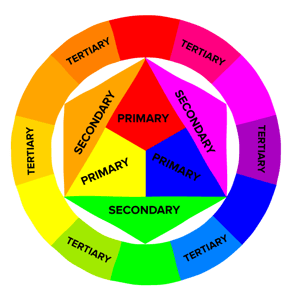
Principal Colors
Secondary Colors
3rd Colors
The Color Theory Wheel
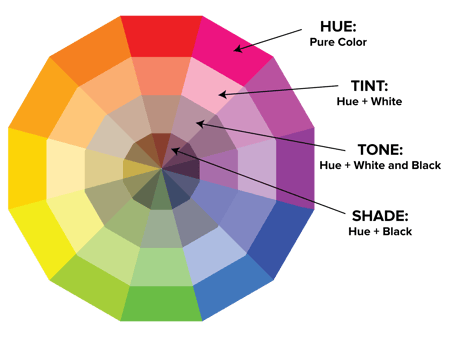
Hue
Shade
Tint
Tone (or Saturation)
Additive & Subtractive Color Theory
CMYK

RGB

The Meaning of Colour
What are the seven color schemes?
1. Monochromatic
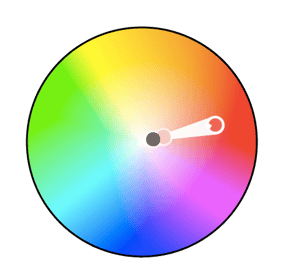

2. Analogous
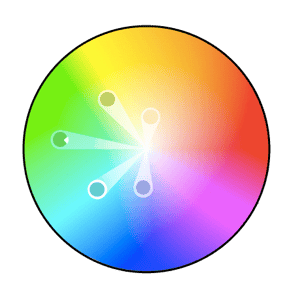

3. Complementary
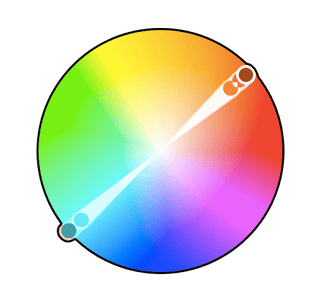

4. Split Complementary
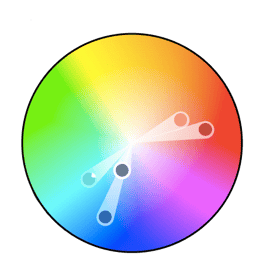

5. Triadic
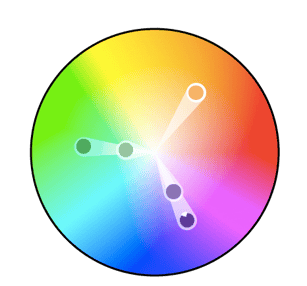

6. Square

 Image Source
 7. Rectangle

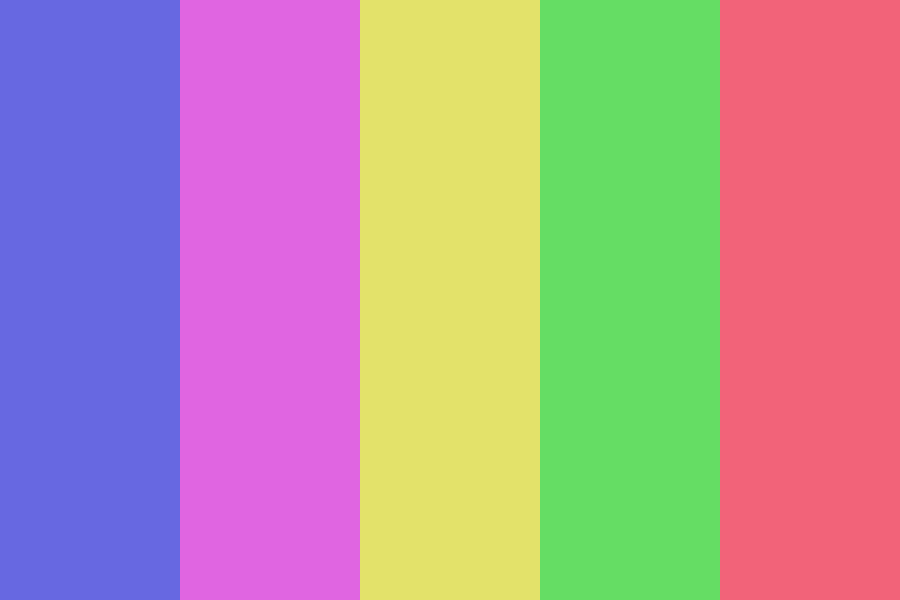
How to Choose a Color Scheme
one. Prioritize the user experience, commencement.
2. Leverage natural inspiration.
3. Set up a mood for your color scheme.
iv. Consider color context.
5. Refer to your color wheel.
6. Utilise the 60-xxx-10 dominion.
seven. Draft multiple designs.
Color Tools
Adobe Color
Illustrator Color Guide
Preset Colour Guides
Finding the Correct Color Scheme


Originally published Jun 21, 2021 10:00:00 AM, updated June 22 2021
morrisprilloomply.blogspot.com
Source: https://blog.hubspot.com/marketing/color-theory-design
0 Response to "Black Grey White Color Scheme Black Grey White Color Scheme Art"
Post a Comment